
 As you can imagine planting plants, aquatic plants takes time, not just to plant them but to see year after year the results, attitudes, and characteristics these plants have.
The last post sort of featured the Pickerel plant and as promised we are moving on to a couple other aquatic plants for this session.
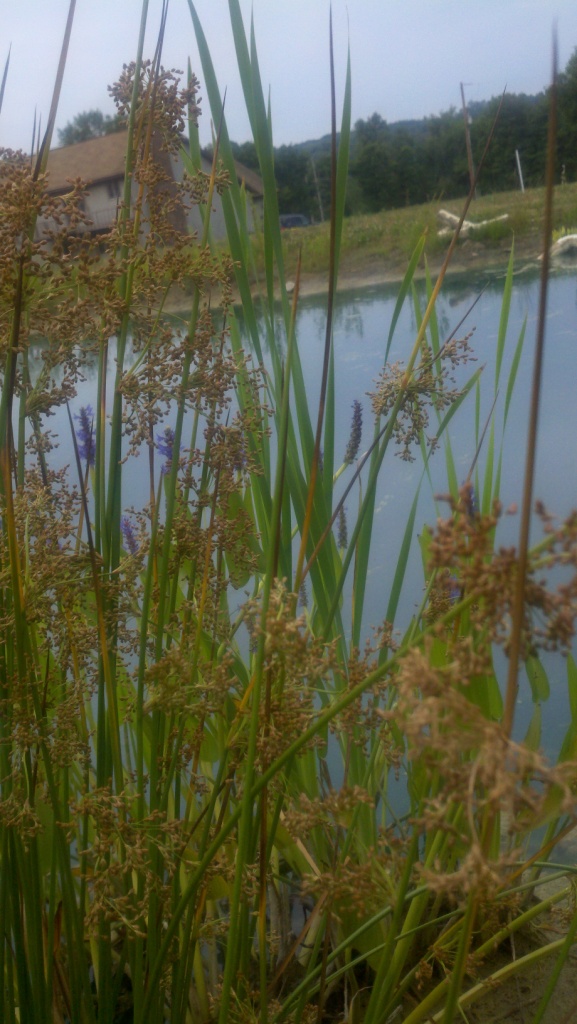
There are plenty of other species of the bulrush but I like the Hard Stem for a couple reasons. They are pretty tough do well with erosion due to their large root mass and can help to break or diffuse the waves and ripples coming to shore. They don’t really get a flower but do have little blooms that shoot out of the side of the stem to make them look a little fuller.
The Hard Stem Bulrush can reach up to 4’ but I have not seen that as of yet. In our location and with winter I see from 2 to 2 and a half feet. Which makes a good barrier to keep geese out, protect the pond from stuff blowing into the pond as well. And the biggest like of mine is they stay standing over winter and provide wave protection in the spring since they are still standing. Cattails do the same but need monitored closely to keep them under control.
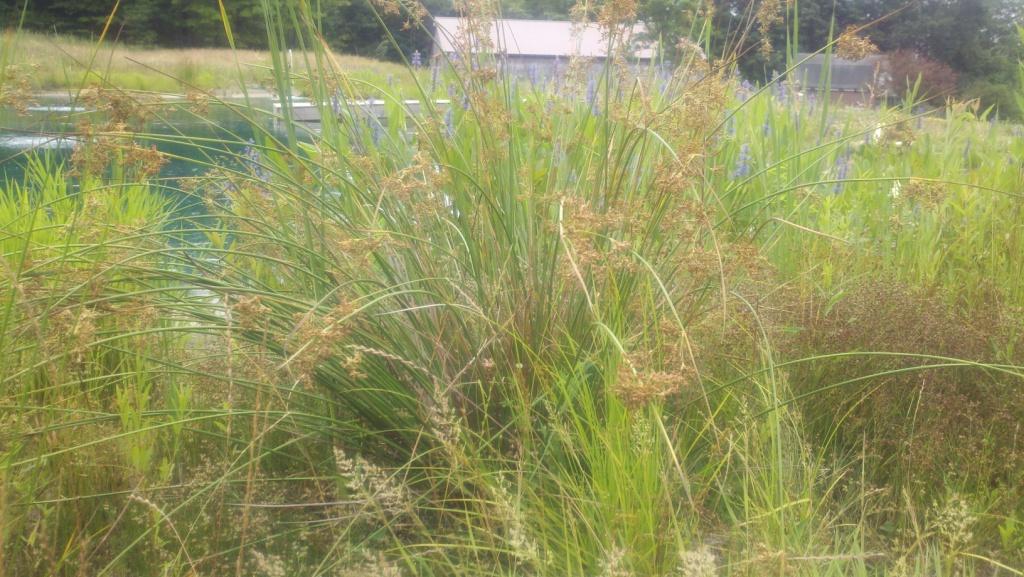 Bulrush is a clumping plant which also helps to hold the shoreline from erosion and able to pull iron from the water gathering nutrients as it grows. Just remember to cut hem back early spring so the dead stems doesn’t add nutrients back to the water.
Another observation over the years is that if the Hard Stem Bulrush is in the water it tends to stand straighter, more like a tube. But if it is growing at the water’s edge or gets little water it will spread out into a bigger diameter sort of like a bush. The root mass Grows larger in diameter each year along with the overall stems coming out of the ground.
Two thoughts on managing the bulrush. Either way we should cut them and remove the cuttings. We could leave them stand all winter to drop their seeds to help spread more or cut them to 6-8 inches above the water line in the fall to reduce spreading and get rid of the excess stems. These bulrush start each year from the ground up so cutting them does not hurt them.
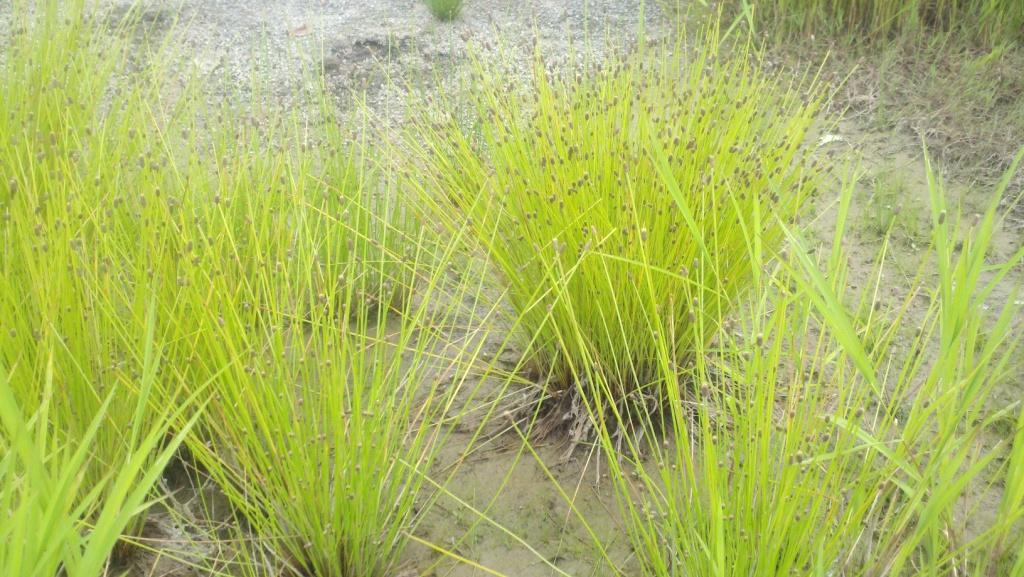 As we started earlier there are plenty of species in the bulrush family and the next on up is the Bulrush Top Bulrush, (at least that’s what I’m calling it). Pretty cool looking plant as the stems are a lime green color and brighten up the pond. Typically they are under water but this year we haven’t seen much rain and the ponds are going down. One place I found called this a spike bulrush, but it looks more like a button to me.
Another new arrival I’m calling it the Spike Bulrush, still the same 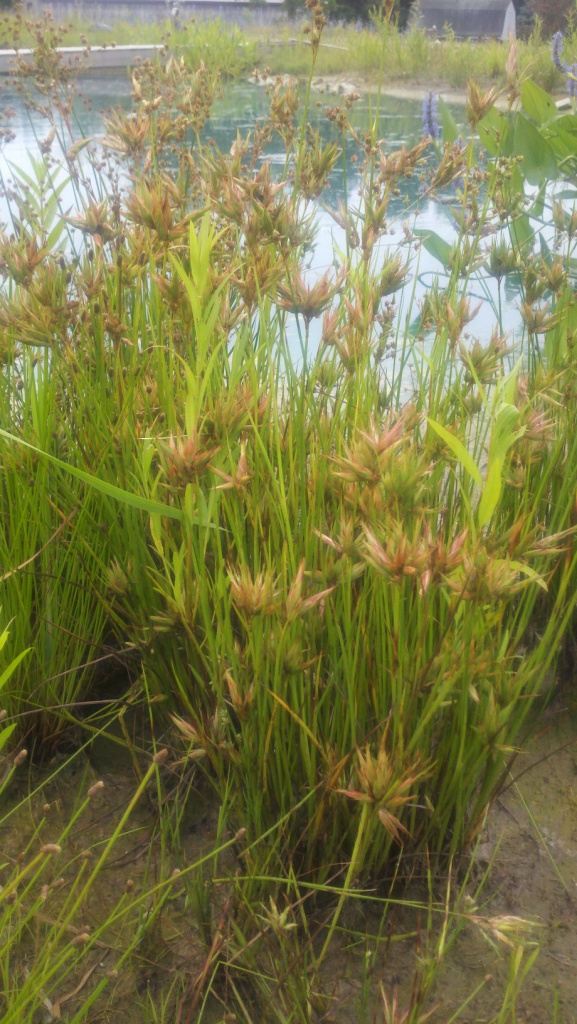 type of clump plants and at the ends of the stems are a cluster of buds that look like spikes. Adds a little more texture to the plant and pond.
As I said I made up these names for the last two pictures. Yes I did research only to find at least two different names for these guys, so it seems who ever found them first names them and then there are variations. Feel free to comment below about post or if you know the correct names of these two plants.


Comments on this entry are closed.
I have artificial bullrushes to use outdoors for decoration in a plant pot. What time of year would they appear normally? I don’t want to put them out at the incorrect season.
I would stick with Spring, Summer and Fall as some species do turn brown in the winter months.